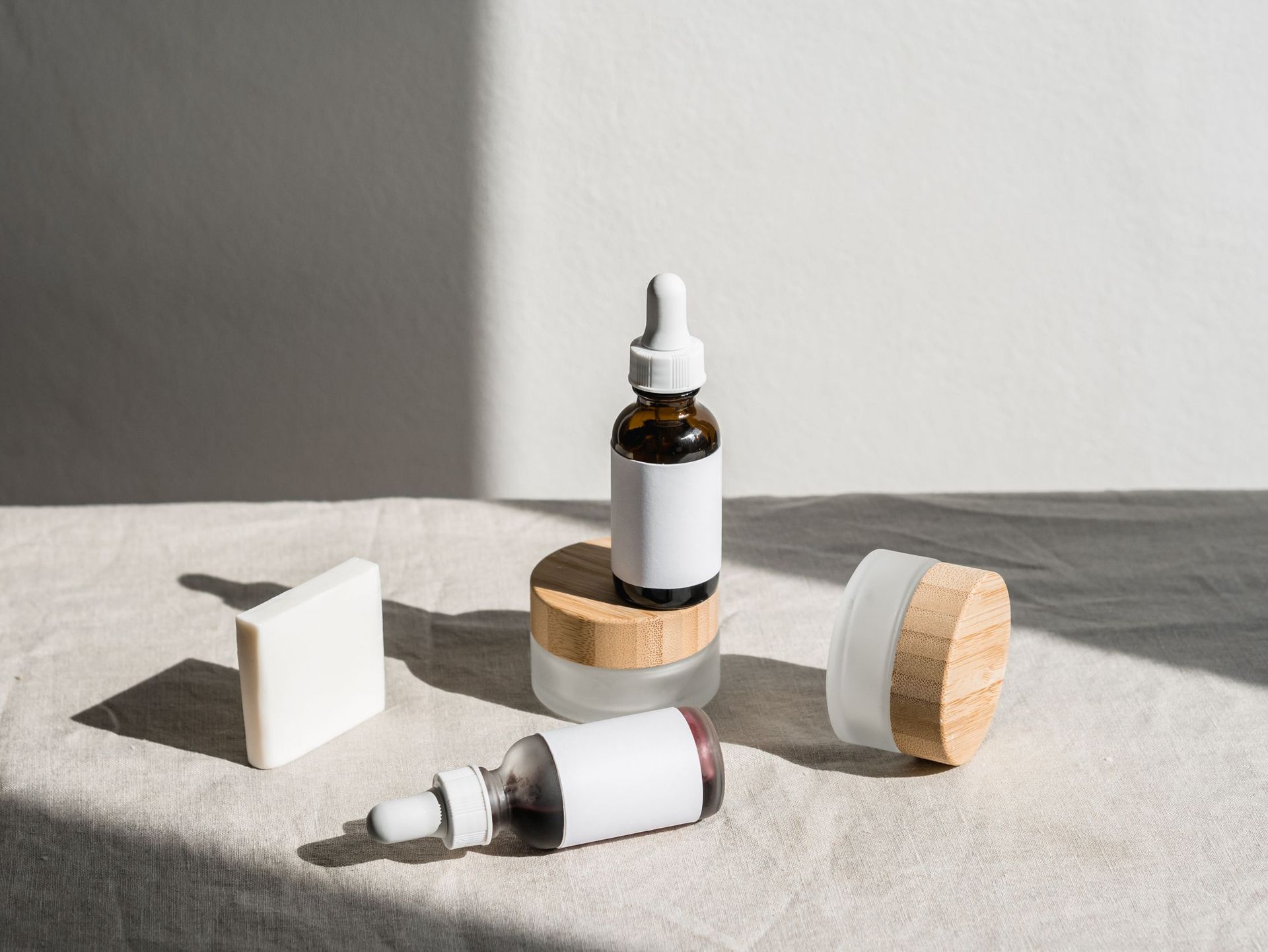
This month, Belle Aire Creations opened BAC Studio, a space where fine fragrance is developed side by side with naming, packaging, visual identity and brand storytelling. Its chief operating officer explained the thinking simply: clients now want “more than a fragrance submission”. They want a partner who understands where the brand is going.
It is a short announcement from a fragrance house in Illinois, and it would be easy to scroll past. We think it says something important about how fragrance products get made, and about what brands in Malaysia and Southeast Asia have been missing.
The industry is quietly admitting something
For decades the model was simple. A brand wrote a brief, fragrance houses sent back submissions, the brand picked one, and then went elsewhere for the bottle, the box, the base formula and the factory. The scent was treated as an ingredient to be bought, not as part of the product.
When an established house starts building studios that develop scent and brand together, it is admitting that the old model produces weaker products. A fragrance chosen in isolation rarely fits the bottle, the price point and the customer as well as one developed with all three in view.
The three-supplier launch
Here is how most perfume and personal care launches still happen in Malaysia. A founder picks a scent from a trader’s catalogue of stock fragrances. Bottles come from one supplier, labels from another, and a filler or contract manufacturer puts it all together. Each party does its part well enough. Nobody is responsible for whether the finished product works.
The problems show up late. The fragrance discolours the body wash. The perfume turns cloudy in the cold. The scent the founder loved on a paper blotter falls flat in a reed diffuser. And because the fragrance came from a catalogue, the brand down the road can buy exactly the same one.
That last point matters most. When every brand is built on the same stock fragrances, the only thing left to compete on is price. That is how a market fills up with lookalike products racing each other to the bottom.
Our view: one partner should be the default, not the upsell
Belle Aire is offering integration as a premium studio experience. We think that has it the wrong way round, at least for this region. For a young brand on a tight budget, one partner who owns the whole journey from idea to shelf is not a luxury. It is the cheapest way to avoid expensive mistakes.
A second, less comfortable point. A lot of what gets sold as private label here is not very private.
If your supplier can sell your scent to your competitor next week, you do not have a product. You have a resale arrangement with your name on the label.
And a third. The large fragrance houses were never built for small brands in Southeast Asia. Their creative teams are hard to reach without a big budget and a known name. So the brands that most need an integrated partner have been the least likely to get one. That is the gap Atlas exists to close.
What end-to-end actually means
Atlas helps brands turn product ideas into finished products, combining fragrance development, product development and manufacturing coordination. We develop. Specialist facilities manufacture. In practice that covers:
- Fragrance development and sourcing, from a bespoke scent to a ready-made accord from Atlas Origins
- Formulation of the product itself, whether that is a perfume, a body wash, a hair care product, a reed diffuser or a car fragrance
- Packaging, filling and bottling, coordinated so the scent, the base and the pack are tested together
- Production through GMP partner facilities, with one team accountable for the result
- A full document set with every formula: IFRA certificate, SDS, COA and TDS
Buying the fragrance from us is optional. If you already have a fragrance, a formula, your own packaging or even a product on sale, we can still take it into production. And every fragrance we develop for a client is for that client’s exclusive use. You can read more about how we work on our Partnership page.
Where AI fits
We call ourselves an AI-native fragrance house, so it is fair to ask what that has to do with any of this. The answer is speed. When a scent and a brand are developed together, both keep changing as the idea sharpens. AI lets us explore and adjust formulas far faster than a traditional round of submissions, so the fragrance can keep up with the brand instead of being locked in on day one. A perfumer still signs off on every scent.
Three questions to ask any private label supplier
- Is this fragrance exclusive to my brand, or can anyone buy it from your catalogue?
- Can you give me the IFRA certificate and SDS for my exact formula, in my product type?
- Who is responsible if the fragrance fails in my product, whether it discolours, separates or fades?
If the answers are vague, you are not buying a product. You are buying a bottle of oil.
The big houses are now selling integration to brands that can afford a studio visit. We think every brand in Southeast Asia deserves the same thinking from the first conversation. If you are planning a perfume, personal care or home fragrance launch, start a project with us and bring the idea, however rough.
Common questions
What is private label perfume?
Private label perfume is made by a manufacturer and sold under your brand. How good it is depends on two things: whether the fragrance is exclusive to you, and whether the formula was developed for your product and your market rather than picked off a shelf.
What does a fragrance OEM do?
An OEM, or original equipment manufacturer, produces a product to a brand’s specification. In fragrance and personal care, that can mean anything from filling a stock fragrance into bottles to developing a new scent and formula from scratch.
Do I need to buy the fragrance from the company that makes my product?
No. But when one partner is responsible for both, problems such as discolouration, separation or weak performance are caught during development rather than after launch.
References
- Perfumer & Flavorist. Belle Aire Creations opens BAC Studio to bring fine fragrance and brand design under one roof. September 2026.
Read more from Atlas DSF in Google. Add us as a preferred source to see our stories first in Top Stories and AI Overviews.